
Facebook, Instagram, Messenger, WhatsApp, Threads… In 2026 the Meta group brings together more than 3.2 billion daily active users. Behind every ad you see on these platforms there is a single tool: Meta Ads Manager. In this article we explain what the platform is, how it works and why understanding its logic before spending your first euro is absolutely essential.
Meta Ads: what exactly are we talking about?
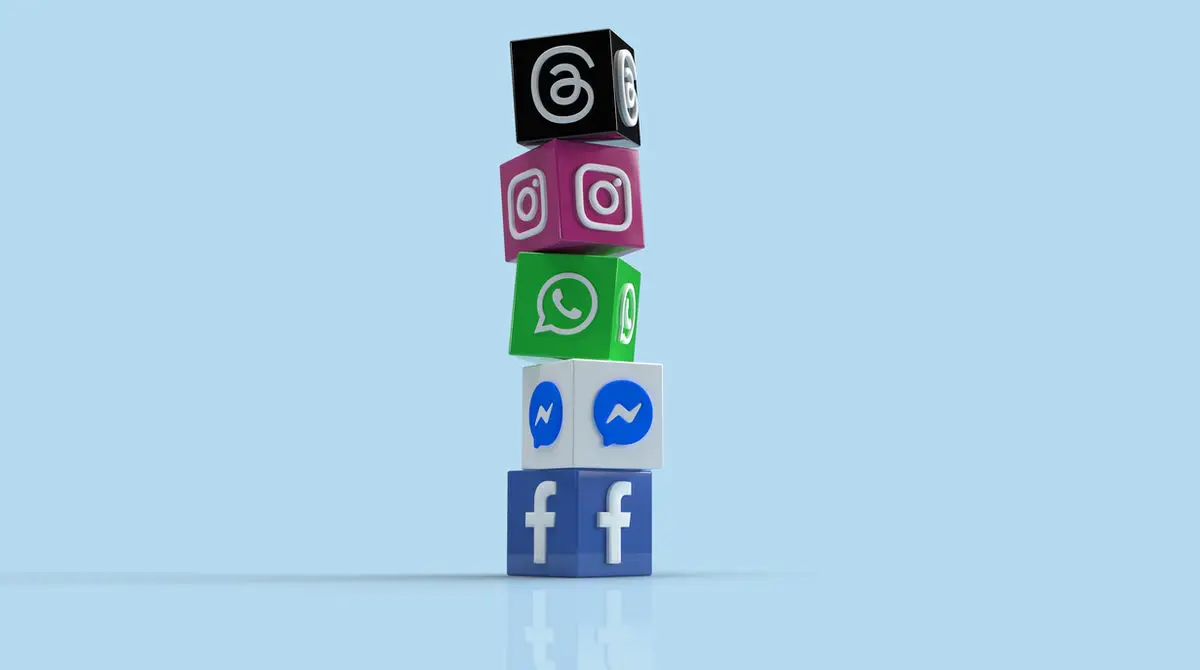
Meta Ads is the Meta group's advertising system. It lets you run paid ads across the whole Meta ecosystem: Facebook, Instagram, Messenger, WhatsApp and, since 2024, Threads. All these campaigns are created, managed and analysed from one centralised tool, Meta Ads Manager, available at business.facebook.com.
The fundamental difference from Google Ads? Meta doesn't respond to search intent. When someone types "running shoes" into Google, they are actively searching. On Meta, your ad appears in the feed of a user who isn't looking for anything, but whom you have identified as likely to be interested. It is interruption advertising, but with unmatched targeting precision.
In 2026, the Meta group brings together more than 3.2 billion daily active users. It is the largest advertising audience in the world, and every user leaves behavioural data that Meta uses to refine your targeting in real time.
4 platforms, one manager:
3bn users · Feed, Stories, Marketplace, Video
2bn users · Feed, Stories, Reels, Explore
Messenger
Ads in conversations and the inbox
Threads & WhatsApp
New ad placements rolled out in 2025–2026
What makes Meta Ads powerful is precisely this unification. A single campaign can reach a user on Instagram in the morning, Facebook at lunchtime and Messenger in the evening, with a message adapted to each surface, all driven by the same algorithm.
How does Meta Ads Manager work?
The 3-level structure
Before creating your first ad, you need to understand the platform's architecture. Meta Ads works on a three-level hierarchy every advertiser must master:
Level 1:
The Campaign, your objective
This is where you define WHAT you want to achieve: awareness, traffic, leads, sales, engagement… Meta uses this objective to calibrate its delivery algorithm. Choosing the wrong objective means optimising for the wrong action and wasting your budget on results that bring you nothing.
Level 2:
The Ad set, your audience and budget
This is where you define WHO will see your ads (targeting by age, location, interests, behaviours or custom audiences) and HOW MUCH you spend. In 2026, Meta is pushing hard towards AI-driven broad targeting via Advantage+ Audience; manual interest targeting is becoming secondary.
Level 3:
The Ad, your creative
This is your actual ad: image, video, carousel, copy, CTA. In 2026, Meta redesigned its creation interface with "Format Display Options": the Flexible and Collection formats have been replaced by a media library system where you upload up to 10 assets that the AI assembles and optimises automatically.
The numbers that prove the platform's power:
3.2bn
Daily active users across the Meta ecosystem
10×
More creative variations tested by top advertisers in 2026
8–17%
Conversion rate improvement with Andromeda-optimised campaigns
What changed radically in 2026?
And why you need to know!
Meta is no longer the platform it was two years ago. Three major changes have transformed how campaigns work, and many advertisers still manage their accounts with outdated habits.
1. The Andromeda algorithm has taken control of targeting
Since late 2024, Meta has rolled out Andromeda, its new advertising AI algorithm. The revolution? You no longer decide who sees your ad: your creative does. The algorithm analyses your images, videos and copy to automatically identify the audience most likely to convert.
Direct consequence: creative quality has become the number one performance lever, ahead of targeting.
2. The attribution model changed on 3 March 2026
This is the most significant change of the year, and the least discussed. Since 3 March 2026, Meta has redefined what a "click" is in its attribution system.
Before: a like, comment or share followed by a purchase within 7 days was counted as an ad conversion.
Now, only a click on a link that leads to your website counts as a click. As a result, many advertisers are seeing their conversion figures drop without their real sales having fallen.
What this changes for you
If your remarketing campaigns showed a very high ROAS, be careful. Those figures were probably inflated by conversions that were not directly linked to your ads. The new model is more honest, and it means reviewing your performance benchmarks.
3. The Pixel alone is no longer enough
In 2026, advertisers relying only on the Meta Pixel to track conversions suffer significant data loss: cookie blockers, iOS 14+, GDPR. The combination of Pixel + Conversions API (CAPI) is now the minimum standard for feeding the algorithm properly with quality signals.
The classic trap: Launching Meta campaigns without a properly configured Pixel, without CAPI and without Consent Mode V2 means flying blind. The algorithm optimises on incomplete data, and you pay full price for mediocre results at best.
Meta Ads: for whom, and for which goals?
Meta Ads works for virtually every sector, but it excels in very specific contexts:
You sell a product or service with a strong visual element (fashion, beauty, home decor, food, sport…).
You want to create demand for a product people aren't actively searching for yet? That is where Meta outperforms Google.
You have an existing customer base to use for retargeting or lookalike audiences.
On the other hand, if your audience has strong, immediate purchase intent, Google Ads will capture that demand better.
Meta and Google are complementary, not interchangeable.
TAKE THE NEXT STEP
Is your Meta Ads account set up to perform in 2026?
Between the March 2026 attribution changes, the rise of Andromeda and the need for CAPI, poorly configured accounts lose valuable data, and money, every day.
An audit identifies within a few hours what works, what leaks and what can be fixed immediately.
At VD Adsconsulting, we audit your Meta Ads account for free: campaign structure, tracking quality, attribution settings, Pixel and CAPI configuration. You leave with a precise diagnosis and a concrete action plan.
Contact us