
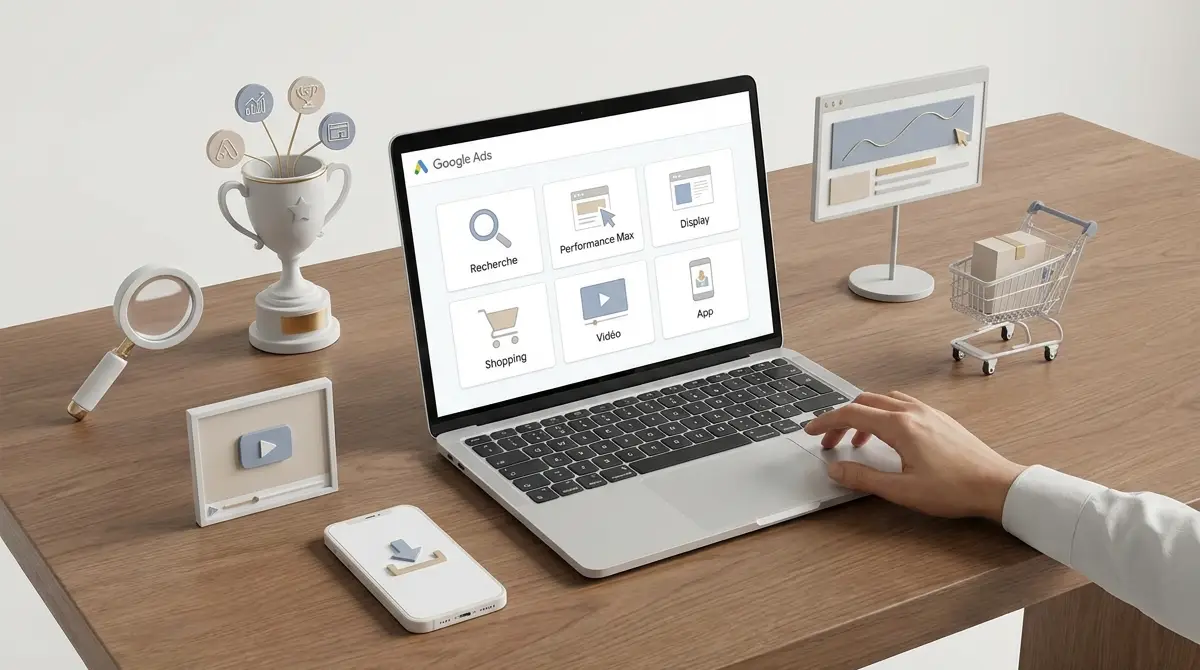
Google Ads is not a single type of advertising: it is a complete ecosystem of 6 distinct ad formats, each designed for a precise goal, a specific audience and a different stage of the customer journey. Choosing the wrong campaign type is the most common mistake, and the most expensive. In this article we explain each format, who it is for and how to choose the right one for your situation.
Why choosing the campaign type is a strategic decision
As we explained in our first article, Google Ads is not just an advertising platform, it is a complete system. And as we saw with the auction system, every decision you make in your account has a direct impact on your costs and results.
The campaign type you choose determines three fundamental things:
1) Where your ads appear
2) Who sees them
3) How Google optimises their delivery.
Activating the wrong format means spending your budget on the wrong audience, at the wrong time, with the wrong intent.
With the rise of Google's AI, this choice matters more than ever.
In 2026, Performance Max campaigns account for a growing share of Google Ads budgets and generate an average ROI of 200% when well optimised. But they need specific conditions to perform. Switching them on without preparation is one of the most frequent mistakes we see in audits.
The 6 Google Ads campaign types explained
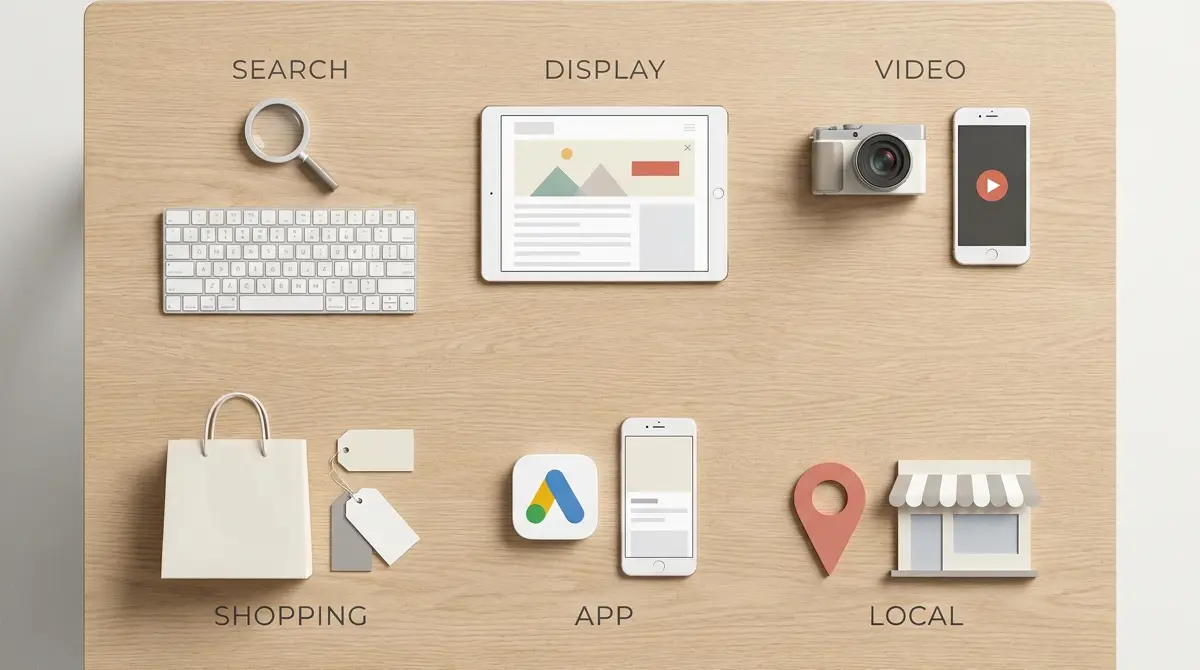
1) Search, the Search Network
Text ads that appear in Google results when someone searches. It is the most direct format for capturing active purchase intent.
Who it's for: any advertiser looking to capture existing demand: services, actively searched products, B2B leads.
Ideal to start with
2) Performance Max
An all-in-one, AI-driven campaign. It runs simultaneously on Search, Display, YouTube, Gmail, Maps and Discover from a single setup. In 2026, campaign-level negative keywords are finally available.
Who it's for: advertisers with 30+ conversions/month and varied creative assets (text, images, videos).
Advanced AI
3) Shopping
Product ads with an image, title, price and store name, shown in the Google Shopping tab. Essential for e-commerce with a structured product feed.
Who it's for: online retailers with a product catalogue and a configured Merchant Center.
E-commerce
4) Display, the Display Network
Visual banners shown on millions of Google partner websites. Ideal for awareness, remarketing and brand presence.
Who it's for: advertisers looking to build awareness or re-engage visitors who didn't convert.
Awareness & Remarketing
5) Video / YouTube
Video ads on YouTube: skippable (after 5s), non-skippable (15s max), bumper ads (6s), in-feed and Shorts. The average CPV ranges from €0.01 to €0.05.
Who it's for: brands looking to build awareness, launch a product or tell a story. YouTube is the world's 2nd largest search engine.
Storytelling
6) Demand Gen
The successor to Discovery campaigns. It runs on YouTube, Gmail and Discover to create demand among audiences who aren't actively searching yet. In 2026, omnichannel bidding is available.
Who it's for: advertisers looking to prospect and create demand upstream of Search.
Prospecting
Performance Max in 2026: power and new features
Performance Max had been criticised since launch for its lack of transparency: a "black box" that managed everything with no room for fine control.
In 2026, Google is correcting course with major updates that give advertisers back some control.
What's new in PMax for 2026:
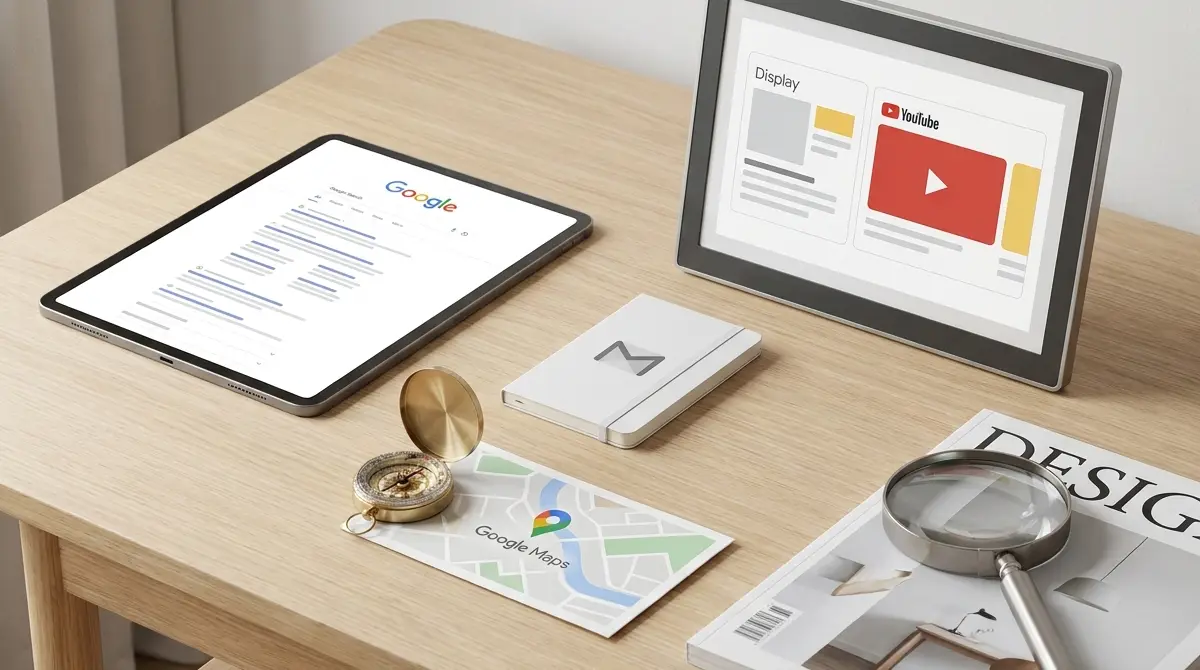
Negative keywords are now available at campaign level, finally preventing the cannibalisation of brand keywords. Channel reports show performance on each surface (Search, YouTube, Display…). Device adjustments are also available to fine-tune delivery.
Performance Max works particularly well in e-commerce with a Shopping feed and alongside existing Search campaigns.
On the other hand, switching it on in an account without a solid conversion history means feeding the AI bad data to optimise on, and burning your budget during the learning phase.
200%
Average ROI of well-optimised Google Ads campaigns in 2026
30+
Minimum conversions/month before activating Performance Max
6s
Length of YouTube bumper ads, the cheapest format for awareness
How to choose the right campaign type for your goal
Here is the decision table we use at VD Adsconsulting in every account audit:
YOUR GOAL | RECOMMENDED FORMAT | REQUIREMENT |
Capture existing demand | Search | Actively searched keywords |
Sell products online | Shopping + PMax | Merchant Center + product feed |
Maximise AI coverage | Performance Max | 30+ conv/month + varied assets |
Re-engage visitors | Display + Search RLSA | Remarketing audiences |
Build awareness | YouTube / Video | Quality video available |
Create demand | Demand Gen | Dedicated prospecting budget |
The classic mistake: switching everything on at once
It is the temptation of every new advertiser, and one of the most expensive mistakes. Each campaign type has a different optimisation logic, a minimum budget to perform and distinct signals it sends to the algorithm.
Running 5 formats at the same time on a limited budget means feeding 5 algorithms with crumbs: none of them has enough data to optimise properly.
Our standard recommendation: Start with a well-structured Search campaign. When you reach 30 conversions a month, consider adding Performance Max. Add Display and Video only once your Search base is profitable and stable. Going step by step isn't timidity, it's strategy.
What video has become in Google Ads in 2026
In 2026, videos are no longer optional in Performance Max: they are a key asset. Google uses them on YouTube, Shorts and Discover to complement your text ads.
A PMax account without video lets Google automatically generate videos from your static assets, often with mediocre results.
The right reflex: Include at least one short video (15 to 30 seconds) in your Performance Max campaigns. It isn't an extra cost: it is a quality signal that improves delivery of your whole campaign across all Google channels.
TAKE THE NEXT STEP:
Are your Google Ads campaigns using the right formats for your goals?
The wrong choice of campaign type can mean thousands of euros wasted every month, without the numbers making it obvious.
Most of the accounts we audit use formats that don't fit their stage of development or their real goals.
At VD Adsconsulting, we analyse your campaign structure, the types activated, their fit with your business goals and their level of maturity. You leave with a clear, prioritised restructuring plan, with no commitment.
Request my free audit